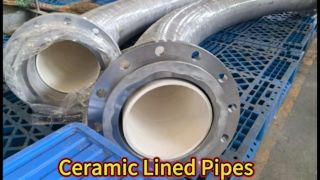
Brief: In this video, we take a focused look at the specifications of Zirconia Toughened Alumina (ZTA) Ceramic and what they mean in practice. You'll see how this advanced composite material combines alumina and zirconia to deliver superior fracture toughness, mechanical strength, and wear resistance, making it ideal for demanding industrial applications.
Related Product Features:
ZTA ceramics feature enhanced fracture toughness due to zirconia's stress-induced phase transformation, which inhibits crack growth.
They offer high mechanical strength with excellent flexural and compressive strength from a dense microstructure and zirconia reinforcement.
ZTA provides exceptional wear resistance with high Vickers hardness, suitable for harsh abrasive environments.
The material exhibits outstanding corrosion resistance against acids, alkalis, salts, and high-temperature media.
ZTA maintains stable performance at temperatures up to 1600°C with moderate thermal conductivity and low thermal expansion.
It combines the advantages of alumina and zirconia, offering an optimal balance of performance and cost-effectiveness.
ZTA is available in various product structures, including steel plate + rubber + ceramic or rubber + ceramic liners.
The material is suitable for applications in manufacturing, electronics, aerospace, and medical technology due to its robust properties.
FAQs:
What is the main difference between ZTA ceramics and monolithic alumina ceramics?
The core difference is in toughness and fracture resistance. ZTA incorporates zirconia particles that undergo stress-induced phase transformation, significantly improving fracture toughness (6-8 MPa*m¹/²) compared to monolithic alumina (3-4 MPa*m¹/²), while maintaining high hardness and wear resistance.
In which applications is ZTA ceramics more advantageous than zirconia ceramics?
ZTA ceramics offer cost advantages over pure zirconia while providing comparable toughness and wear resistance. They are ideal for large-volume industrial applications like wear-resistant pipe liners, new energy vehicle insulation parts, and chemical valve components, where performance and budget are balanced.
How do I determine if my operating conditions require upgrading to ZTA ceramics?
Consider upgrading to ZTA if you experience frequent cracking or chipping of wear parts, visible impact craters or groove-like wear, strong equipment vibrations, or short maintenance intervals affecting production efficiency. These indicate that standard materials may not withstand the operational stresses.
Is the installation and maintenance of ZTA ceramics complicated?
No, installation is straightforward. ZTA components use proven methods like adhesive bonding with high-strength ceramic adhesives, mechanical fastening with bolt holes or dovetail grooves, and modular designs for easy replacement, minimizing downtime and simplifying maintenance.