Highlight:
alumina ceramic hydrocyclone liner
, ceramic liner for sand washing
, wear resistant alumina ceramic liner
Alumina Ceramic Liner for Sand Washing Hydrocyclone - Wear Resistance Solution
Product Description
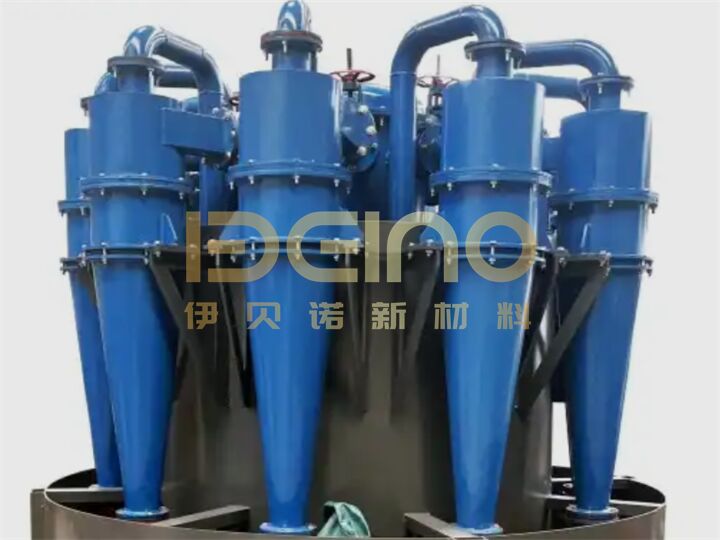
The cyclone is the core grading equipment in the sand washing production line, used to separate fine powder and muddy impurities from sand and gravel, achieving particle size grading and purification of sand and gravel materials. However, during the sand washing process, the impact and wear of sand and gravel particles and slurry on the inner wall of the cyclone are extremely severe. Traditional metal linings or rubber linings have a relatively short service life and require frequent replacement, which can negatively impact production efficiency. Alumina ceramic linings, with their superior wear resistance and corrosion resistance, make alumina ceramic lining boards for sand washing hydrocyclones an ideal wear-resistant protection solution for cyclones.

Product parameters
| Items |
Specifications |
| Content of alumina |
≥95% |
| Density |
≥3.8 g/cm3 |
| Rockwell A hardness |
≥85HRA |
| Impact strength |
≥1500 MPA |
| Fracture toughness |
≥4.0MPa·m1/2 |
| Bending Strength |
≥330MPa |
| Thermal conductivity |
20W/m.K |
| Thermal expansion coefficient |
7.2×10 6m/m.K |
| Volume wear |
≤0.02cm3 |
Product Features
1. Design different cyclone liners according to the cylinder, cone pipe, outlet pipe, etc., and the ceramic structure is reasonable without gaps.
2. The ceramics are made 10-25mm thick, with 100 tons of dry pressing, high density, and excellent wear resistance.
3. The wear-resistant ceramic sheet adopts a high-strength adhesive staggered pasting process, which is firmly bonded and does not fall off. It is suitable for harsh working conditions such as high impact or dynamic operation.
4. The inner wall is smooth, the material is smooth, and the height difference between the ceramics is within 0.5mm, which can maintain the maximum tangential velocity of the slurry in the cyclone, reduce energy loss, and obtain the best classification effect.
| Liner Type |
Service Life |
Wear Resistance |
Corrosion Resistance |
Energy Consumption Impact |
Maintenance Cost |
| Alumina Ceramic |
5-10 years |
★★★★★ |
★★★★★ |
Reduces by 5%-10% |
Low (infrequent replacement) |
| Rubber Liner |
3-6 months |
★★ |
★★★ |
High resistance, increased energy consumption |
High (frequent replacement) |
| Metal Liner |
1-3 months |
★★★ |
★ |
Prone to rust, high resistance |
Very High (regular welding repair required) |
Installation and Maintenance Guidelines
Before installation, clean the inner wall of the hydrocyclone to remove impurities and rust, ensuring the inner wall is smooth and dry. Select a special high-temperature-resistant adhesive (for patch-type) or matching fasteners (for integral-type) according to the type of liner.
During installation: Ensure that the ceramic liners are tightly joined, with gaps ≤0.5mm, to prevent slurry leakage that could cause adhesive failure; after installation, allow it to cure for at least 24 hours before putting it into use.
Routine maintenance: Regularly check the liner for looseness or damage. If localized damage is found, replace the corresponding module promptly to prevent further wear; avoid running the machine empty or under excessive flow or pressure conditions to reduce impact damage to the ceramic liner.
Industry Application Advantages
For sand washing companies, using cyclones with alumina ceramic linings can significantly reduce equipment downtime for maintenance, lowering spare parts procurement and labor maintenance costs. At the same time, the stable lining performance ensures accurate sand and gravel classification, improving the quality of the finished sand (such as meeting standards for clay content and uniform particle size), helping companies meet national standards for sand and aggregate, and enhancing their market competitiveness.
Application areas
The cyclones produced by our company are lined with wear-resistant ceramics, which are widely used in the beneficiation process of sand washing, coal preparation, ferrous metal mines, and non-ferrous metal mines. Improve the metal recovery rate of the beneficiation and increase the economic benefits of the beneficiation.
Q1: How to choose the thickness of the alumina ceramic liner?
A1: It needs to be determined according to the hydrocyclone diameter and operating conditions. The conventional sand washing hydrocyclone liner thickness is 5-20mm; for large-diameter hydrocyclones (≥500mm) or high-hardness sand and gravel conditions, a 10-20mm thick ceramic liner is recommended.
Q2: Will the ceramic liner affect the classification effect of the hydrocyclone?
A2: No. The smooth surface of the ceramic liner ensures a stable flow trajectory of the slurry, which can reduce fluctuations in classification accuracy caused by inner wall wear and material buildup, improving the consistency of the finished sand.
Q3: Can the ceramic liner be partially replaced if damaged?
A3: Yes. The patch-type ceramic liner supports single-piece replacement without overall disassembly, effectively reducing maintenance time and costs; if the integral liner is partially damaged, it needs to be assessed whether to replace the entire liner based on the damaged area.
Q4: Can the alumina ceramic liner adapt to sand washing slurry with high mud content and high viscosity?
A4: Absolutely. The ceramic liner has a high surface smoothness and is not prone to material buildup and scaling. Even under high-viscosity slurry conditions, it can maintain smooth material flow and will not affect the classification efficiency due to impurities adhering to the inner wall.
Q5: Does the installation of the ceramic liner require a professional team? Is daily maintenance difficult?
A5: The installation of the patch-type liner is relatively simple, and customers can operate it themselves according to the installation manual; for the integral liner, it is recommended to have it installed under the guidance of the manufacturer's technical team to ensure proper fit. Daily maintenance only requires regular (1-2 months) inspection of the liner's integrity, without complex operations, and the maintenance threshold is low.
Q6: What is the temperature limit of the alumina ceramic lining? Can it withstand outdoor working conditions in both winter and summer?
A6: The ceramic lining has a temperature range of -50℃ to 150℃, which can adapt to the temperature changes of most outdoor sand washing production lines. It will not crack in low winter temperatures or deform and age in high summer temperatures, demonstrating strong stability.
Q7: What factors affect the service life of the ceramic lining? How can its service life be extended?
A7: The main influencing factors include sand and gravel hardness, slurry flow rate, and equipment operating pressure. Methods to extend the service life include: ① controlling the slurry flow rate within the equipment's design range to avoid overflow operation; ② regularly cleaning impurities at the cyclone inlet to prevent large, hard particles from impacting the lining; ③ promptly reinforcing any loose parts of the lining to prevent further damage.

 Your message must be between 20-3,000 characters!