Highlight:
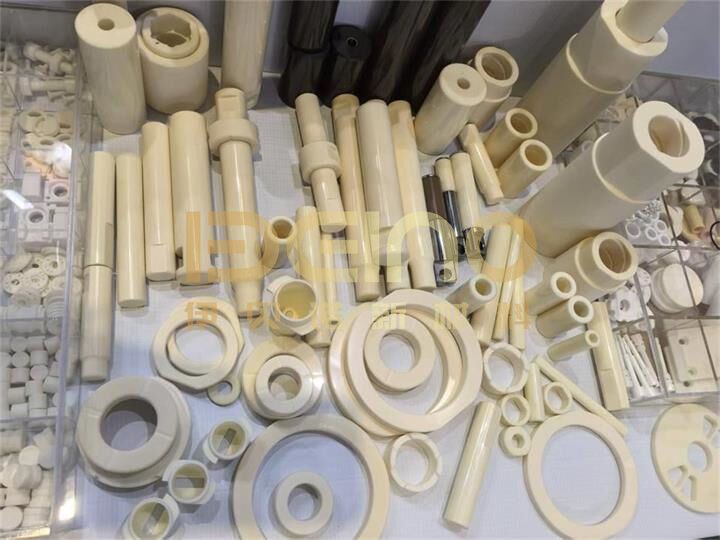
High alumina ceramic pipe sleeve
, Abrasion resistant ceramic lined sleeve
, Alumina ceramic protection pipe sleeve
High Alumina Ceramic Lined Pipe Sleeve for Abrasion Protection
Product description
High alumina ceramic-lined pipe sleeve is specially engineered for severe abrasion and erosion conditions in bulk material conveying systems. During pneumatic conveying, powder and granular materials move at high speed and continuously impact the inner wall of pipelines, especially at elbows and transition sections. This leads to rapid wear, frequent maintenance, and increased operating costs.
To solve this problem, the ceramic sleeve adopts a three-layer composite structure consisting of a steel pipe, high-strength adhesive, and 95% high purity alumina ceramic lining. The ceramic layer provides ultra-high hardness (HRA85-88) and excellent wear resistance, while the steel outer shell ensures structural strength and easy installation. This combination significantly extends service life and improves conveying efficiency.
The smooth ceramic inner surface reduces friction resistance and prevents material accumulation or blockage. In addition, the ceramic lining isolates materials from steel, effectively preventing iron contamination, which is particularly important for lithium battery materials, chemical powders, and high-purity bulk materials.
Compared with conventional steel pipes, high alumina ceramic-lined sleeves offer 4-5 times longer service life, lower maintenance frequency, and reduced downtime. They are widely used in cement plants, steel mills, thermal power stations, mining operations, coal handling systems, ports, and chemical processing industries.

Product parameters
| Items |
Specifications |
| Al2O3% |
≥92% |
| Fe2O3% |
≤0.20% |
| Mohs' hardness |
9 |
| Water Absorption (%) |
≤0.02 |
| Density(g/cm3) |
≥3.60 |
| Abrasion(%) |
≤0.02 |
Products Feature
The high alumina ceramic-lined pipe sleeve is made of 95% high purity alumina ceramic, providing excellent hardness and wear resistance for severe conveying conditions. The three-layer structure of the steel pipe, high-strength adhesive, and ceramic lining ensures strong bonding and long service life. The smooth ceramic inner surface reduces friction and prevents material buildup, improving conveying efficiency. In addition, the ceramic lining offers corrosion resistance and prevents material contamination, while the lightweight structure makes installation easier.
| Size |
Inner Diameter |
Ceramic |
Steel |
Length |
| DN80 |
80mm |
5-10mm |
3mm |
200-400mm |
| DN100 |
100mm |
8-10mm |
4mm |
200-500mm |
| DN150 |
150mm |
10-12mm |
4mm |
300-600mm |
| DN200 |
200mm |
10-15mm |
5mm |
300-800mm |
| DN300 |
300mm |
12-15mm |
5mm |
500-1000mm |
Production workshop introduction
The company has strong product development and production capabilities, with advanced wear resistant ceramic production lines, isostatic pressing, automatic presses, spray drying towers, etc., as well as steel structure production lines, medium frequency hot simmering pipe benders and other large scale equipment, and are equipped with professional Equipment and technicians, welded ceramic lining pipes adopt a one piece forming seamless pipe process.
Why Do Pipelines Wear Out Quickly?
Many industries, such as cement, steel, mining, and power plants, suffer from rapid pipeline wear. High-speed material conveying, sharp particles, and long-term friction cause traditional steel pipes to fail frequently, leading to downtime and increased maintenance costs.
Solution — Alumina Ceramic Sleeve
The alumina ceramic sleeve is designed to protect pipelines in highly abrasive conveying systems. The inner layer uses high-density alumina ceramic, which significantly improves wear resistance and extends service life compared with conventional steel pipes.
Where Is It Used?
The ceramic sleeve is ideal for pneumatic conveying systems handling abrasive materials such as cement powder, coal dust, mineral fines and fly ash. It performs well in straight pipes, elbows, and high-wear areas.
FAQ
Q1:How long will the service life be compared with that of a steel pipe?
A1:This is usually the first concern. The alumina ceramic sleeve normally lasts 5–10 times longer than standard steel pipe under abrasive conveying conditions, which significantly reduces replacement frequency and downtime.
Q2:Will the ceramic lining fall off during operation?
A2:The ceramic tiles are bonded with high-strength adhesive and installed using a mature production process. Under normal working conditions, the ceramic lining remains firmly attached and does not fall off.
Q3:Can it handle high-impact materials?
A3:Yes. High-density alumina ceramic provides excellent wear resistance, and thicker ceramic layers can be selected for higher impact areas such as elbows and drop points.
Q4: What sizes are available?
A4:The ceramic sleeve can be customized according to pipeline diameter, length, and ceramic thickness. Both standard and non-standard sizes are supported.
Q5:How do I choose the correct ceramic thickness?
A5:Ceramic thickness is selected based on material type, velocity, and wear conditions. Our engineers can recommend a suitable thickness after receiving the working parameters.

 Your message must be between 20-3,000 characters!