Highlight:
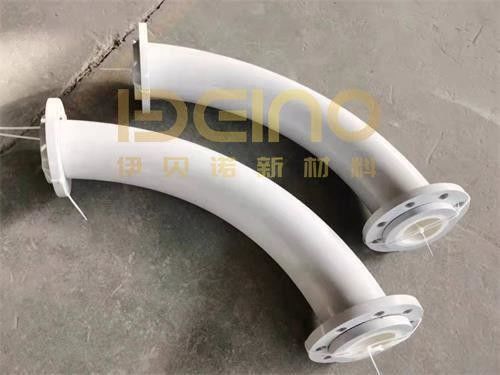
Abrasion Resistant Steel Pipe ODM
, Ceramic Tile Lined Pipe Bend
, Inorganic Non Metallic Alumina Ceramics
Alumina Ceramic Sleeve Lined Steel Pipe for Abrasive Conveying
PRODUCT DESCRIPTION
ELACERA® alumina ceramic sleeve-lined pipes combine a steel outer shell with a continuous high-alumina ceramic wear layer. They are designed for pneumatic and mechanical conveying systems handling ash, coal powder, cement, slag, minerals, and other abrasive materials. Straight pipes, elbows, and other pipe sections can be customized according to the actual working conditions.
Why Do Conveying Pipes Wear Unevenly?
Abrasive particles do not wear every part of a pipeline at the same rate. Wear is normally concentrated at elbows, reducers, pipe joints, and other positions where the material changes direction or velocity.
Once local wall thinning develops, leakage may occur even when most of the pipe remains usable. This can result in repeated replacement, unplanned shutdowns, and higher maintenance costs.
How Does the Ceramic Sleeve Structure Work?
The outer steel pipe provides mechanical strength and installation support. Inside the pipe, high-alumina ceramic sleeves form a full-circumference wear-resistant surface that prevents abrasive materials from directly contacting the steel wall.
Unlike a conventional ceramic tile lining, an integral ceramic sleeve has no longitudinal tile joints. Individual sleeves are installed section by section along the pipe. Joint alignment, finished internal diameter, and flange-end transitions must be carefully controlled to maintain a consistent internal flow path.

Why Choose a Ceramic Sleeve Lined Pipe?
- Full-circumference protection against sliding abrasion
- No longitudinal ceramic tile joints
- Reduced risk of exposed steel between ceramic pieces
- Smooth internal surface for powder conveying
- Steel outer shell provides structural strength
- Custom pipe diameter, length, lining thickness, and connection
- Suitable for straight pipes, elbows, and other customized sections
A thicker ceramic lining is not always the best answer. The correct design should match the material hardness, particle size, flow velocity, impact angle, operating temperature, and pipe geometry.
Alumina Ceramic Sleeve Technical Parameters
|
Item
|
Typical Value |
| Al₂O₃ Content |
≥95% |
| Density |
≥3.75 g/cm³ |
| Rockwell Hardness |
≥85 HRA |
| Compressive Strength |
≥1200 MPa |
| Flexural Strength |
≥330 MPa |
| Fracture Toughness |
≥4.0 MPa·m¹ᐟ² |
Ceramic Sleeve Lined Pipe Configuration
|
Item
|
Specification |
| Product Structure |
Steel Pipe + Bonding Layer + Alumina Ceramic Sleeves |
| Ceramic Lining |
Integral Ceramic Sleeves Installed Section by Section |
| Outer Pipe Material |
Carbon Steel or Stainless Steel |
| Lining Thickness |
Customized |
| Pipe Diameter and Length |
Customized According to Drawing |
| Connection Method |
Flanged or Welded |
| Application |
Ash, Coal Powder, Cement, Slag and Mineral Conveying |
Typical Applications
Ceramic sleeve-lined steel pipes are commonly used in:
Pneumatic ash conveying systems
Coal powder conveying pipelines
Cement and raw material lines
Mineral and tailings conveying systems
Steel plant dust and slag pipelines
Other abrasive powder conveying equipment
Selection Based on the Wear Conditions
For accurate selection, the wear location should be reviewed before deciding the ceramic thickness. Elbows exposed to concentrated particle impact may require a different design from straight pipes subjected mainly to sliding abrasion.
Please provide the conveyed material, particle size, flow velocity, operating temperature, pipe dimensions, connection method, and installation drawing. This information allows the ceramic sleeve arrangement and internal transitions to be designed correctly.
FAQ
What is the difference between a ceramic sleeve and a ceramic tile lining?
A ceramic sleeve provides full-circumference protection without longitudinal tile joints. Ceramic tiles are normally selected for larger diameters or pipe sections where integral sleeves are unsuitable.
Can ceramic sleeves be used in elbows?
Yes. Ceramic sleeves can be manufactured and arranged according to the elbow diameter, bend radius, and internal geometry.
Can the outer steel pipe be customized?
Yes. Carbon steel or stainless steel can be selected according to the installation, temperature, corrosion, and structural requirements.
How long does a ceramic sleeve lined pipe last?
Actual service life depends on the conveyed material, particle size, velocity, impact angle, temperature, and operating time. These conditions should be reviewed before making a service-life estimate.
What information is needed for a quotation?
Please send the pipe drawing, dimensions, conveyed material, particle size, velocity, temperature, connection standard, and required quantity.
If the same pipeline section is being replaced repeatedly, send the operating data and drawing to ELACERA®. Our technical team will review the wear mechanism and recommend a suitable ceramic sleeve lining design.

 Your message must be between 20-3,000 characters!