Highlight:
wear resistant ceramic sleeve
, ceramic sleeve for lithium battery
, ceramic sleeve lined pipe
Wear Resistant Ceramic Sleeve for Lithium Battery Material Conveying
Product Description
In lithium battery material production, conveying systems are required to handle fine powders under high velocity and enclosed conditions. Materials such as lithium carbonate, lithium iron phosphate, graphite, and ternary cathode powders are not only abrasive but also highly sensitive to contamination.
Traditional steel pipelines often suffer from rapid wear, especially at elbows and high-velocity sections. As the inner wall wears down, metal particles may mix into the powder, affecting product purity and consistency. This has become a key concern for battery material manufacturers.
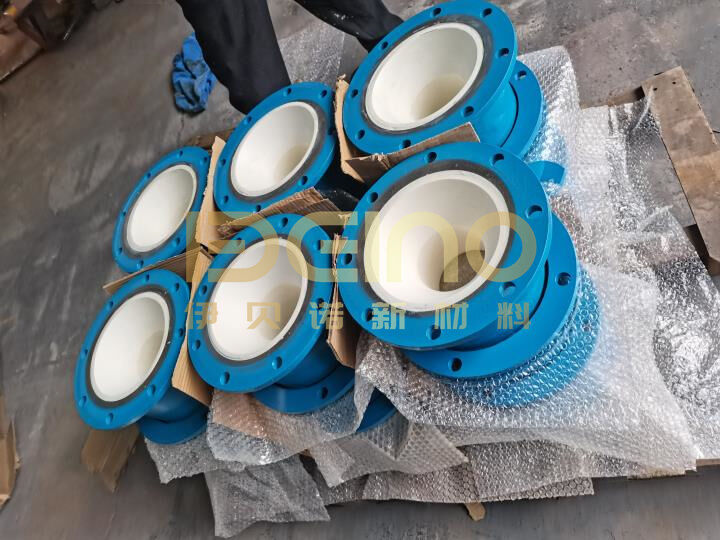
Wear-resistant ceramic sleeve with alumina ceramic ring lining offers a practical solution. The high-hardness ceramic layer forms a protective barrier inside the steel pipe, preventing direct contact between the material and the metal surface. At the same time, the outer steel pipe ensures structural strength and pressure resistance.
Why It Matters for the Lithium Battery Industry
Reduce metal contamination in powder materials
Maintain consistent material quality
Extend pipeline service life under high wear conditions
Improve conveying efficiency in closed systems

Advantages of Lithium Battery Production
Compared with conventional steel pipes, ceramic-lined sleeves provide more stable and reliable performance in battery material conveying systems.
Reduce risk of metal contamination
Improve product purity and consistency
Extend the service life of conveying pipelines
Reduce maintenance frequency and downtime
Maintain stable conveying performance over long periods
| Problem (Issue) |
Solution |
| Rapid wear of steel pipelines in high velocity conveying systems |
Use an alumina ceramic ring-lined sleeve to protect the inner wall and extend service life |
| Metal contamination caused by worn steel pipes |
Ceramic lining acts as a non-metal barrier to reduce contamination |
| Frequent pipe replacement and maintenance downtime |
Long-life ceramic sleeve reduces replacement frequency and improves system stability |
| Unstable conveying due to a rough or worn inner surface |
Smooth ceramic surface reduces friction and ensures stable flow |
| Not suitable for a clean production environment |
Stainless steel outer pipe + ceramic lining improves cleanliness |
| High maintenance costs over time |
Reduced wear and longer life lower overall operating cost |
| Ceramic-lined sleeves are not just a wear solution, but a long-term improvement in production stability and material quality. |
Structure Design
The ceramic sleeve adopts a layered composite structure:
Inner lining: Alumina ceramic rings (high hardness, wear-resistant)
Bonding layer: High-strength adhesive
Outer pipe: Stainless steel or carbon steel
Inner surface: Smooth ceramic finish
This structure ensures both wear resistance and mechanical reliability.
Product Application
Lithium battery cathode material conveying systems
Anode material production lines
Powder storage and transfer pipelines
Pneumatic conveying systems
High-purity material transport pipelines
Company Profile
Hunan Yibeinuo New Material Co., Ltd. has now formed: wear-resistant ceramic sheets, wear-resistant ceramic linings, wear-resistant ceramic composite pipe linings, wear-resistant ceramic feed pipes for lithium batteries, wear-resistant ceramic drum encapsulation, and overall equipment Eight series of products, including ceramic lining, ceramic pump tube, ceramic transition sleeve, etc., mainly serve thermal power, cement, steel, port, coal, port, mining, construction machinery, sand making, and other industries. The company’s products have high strength and wear resistance. Damage, corrosion resistance, etc.
Products Feature
The wear-resistant ceramic feed tube of the lithium battery is designed with advanced materials that offer excellent wear resistance, corrosion resistance, and high-temperature resistance. These tubes are capable of withstanding harsh environments and can significantly improve the lifespan and reliability of lithium batteries.
The smooth inner wall of the feed tube reduces the risk of blockage and ensures a continuous and stable flow of materials.
The good sealing performance of the wear-resistant ceramic feed tube ensures that there is no leakage or spillage during the production process. This helps to save materials, reduce waste, and minimize the risk of accidents.
The lightweight and easy installation of the ceramic feed tube allows for easy handling and replacement, which is important in cases where frequent maintenance is required. The wear-resistant ceramic feed tube of a lithium battery is a reliable and durable component that can help to improve the performance and efficiency of lithium battery manufacturing processes.
Why Stainless Steel Outer Pipe is Recommended
For lithium battery applications, stainless steel outer pipes are often preferred due to their corrosion resistance and cleaner surface characteristics.
Combined with ceramic lining, this structure provides a cleaner and more stable conveying environment, helping meet strict production standards.
FAQ
Q1: Will the ceramic sleeve cause contamination of battery materials?
A1:No. Alumina ceramic is a non-metallic material with high chemical stability. It helps reduce metal contamination compared with traditional steel pipes.
Q2. Why is contamination control important in lithium battery production?
A2:Even small amounts of metal impurities can affect battery performance and consistency. Using ceramic lining helps maintain higher material purity.
Q3. Should I choose stainless steel or carbon steel as the outer pipe?
A3:Stainless steel is recommended for lithium battery applications due to its better corrosion resistance and cleaner surface. Carbon steel can be used in less demanding environments.
Q4:Is the ceramic lining suitable for fine powder conveying?
A4:Yes. The smooth ceramic inner surface reduces friction and helps maintain stable powder flow without blockage.
Q5:How does the service life compare with normal steel pipes?
A5:Under the same conditions, ceramic-lined sleeves typically last several times longer than conventional steel pipes.
Q6:Can it be used in high velocity pneumatic conveying systems?
A6:Yes. It is especially designed for high velocity and high wear conditions in pneumatic conveying systems.
Q7:Will the ceramic rings fall off during operation?
A7:No. The ceramic rings are fixed with high-strength adhesive and structural support, ensuring stable long-term operation.
Q8: Is customization available for lithium battery production lines?
A8:Yes. Pipe diameter, length, ceramic thickness, and material selection can all be customized based on actual working conditions.
Q9:Does the ceramic lining affect conveying efficiency?
A9:No. The smooth surface actually improves flow efficiency and reduces energy loss.
Q10:What parts of the system benefit most from ceramic sleeves?
A10:Elbows, vertical pipelines, and high wear sections benefit the most from ceramic lining.

 Your message must be between 20-3,000 characters!