Highlight:
Welded Alumina Ceramic Lining
, White Ceramic Insulation Sheets
, Welded Ceramic Insulation Sheets
Weld-On Alumina Ceramic Tiles for High-Temperature Wear Protection
Product description
Choosing a ceramic lining is not only about hardness. In equipment exposed to elevated temperatures, repeated impact, or vibration, the fixing method can determine whether the lining remains secure. ELACERA® weld-on alumina ceramic tiles combine a hard, wear-resistant surface with an additional mechanical fixing point for demanding operating areas.
Where Weld-On Tiles Make Sense
Adhesive-bonded ceramic tiles perform well in many abrasion applications. However, when temperature changes, vibration, or material impact place extra stress on the bonding layer, adhesive alone may not provide the required installation security.
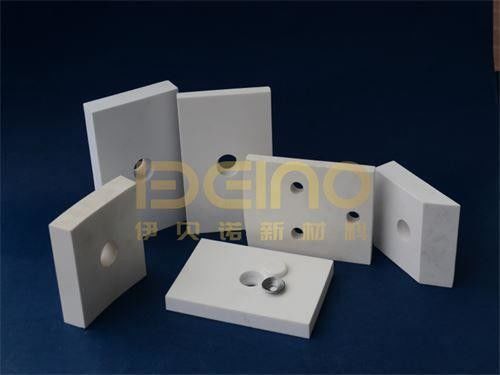
A weld-on ceramic tile has a recessed fixing hole. After the tile is bonded to the prepared steel surface, a steel welding cup or stud is fixed through the hole to the equipment body. A ceramic plug is then fitted over the fixing point to protect the metal from direct wear.
This combined bonding and mechanical fixing method is commonly used where tile detachment would create a serious maintenance problem.
The Fixing Detail Matters
The performance of a weldable ceramic lining depends on more than the ceramic itself. Steel surface preparation, adhesive selection, weld quality, tile alignment, joint width, and protection of the fixing hole all affect the finished lining.
If the ceramic plug is not correctly installed, the exposed metal fixing point may become an early wear location. Uneven joints or raised tile edges can also concentrate particle impact. For this reason, installation quality should be considered together with ceramic thickness and material grade.

Practical Advantages
- Additional mechanical retention at demanding wear points
- High-alumina surface protects the equipment from abrasion
- Suitable for temperature changes, vibration, and moderate impact
- Individual damaged tiles can be replaced locally
- Tile size, thickness, shape, and fixing hole can be customized
- Applicable to flat, curved, and irregular steel surfaces
Technical Parameters
|
Items
|
Specifications
|
| Al₂O₃ Content |
≥92% |
| Fe₂O₃ Content |
≤0.20% |
| Mohs Hardness |
9 |
| Water Absorption |
≤0.02% |
| Density |
≥3.60 g/cm³ |
| Abrasion Loss |
≤0.02% |
The final ceramic grade, tile thickness, and fixing system should be confirmed according to the operating conditions.
Common Application Areas
Weld-on alumina ceramic tiles are commonly installed in:
- Chutes and hoppers
- Cyclones and separators
- Pneumatic conveying pipes
- Dust collection ducts
- Fan housings
- Coal and ash handling equipment
- Cement and mineral processing equipment
- Other high-wear steel surfaces
Before Selecting the Tile
A thicker tile is not automatically the best choice. The conveyed material, particle size, impact angle, operating temperature, vibration, steel plate thickness, equipment shape, and access for welding should be reviewed first.
For curved or irregular surfaces, the tile dimensions and layout should be matched to the equipment geometry. Areas exposed mainly to sliding abrasion may require a different arrangement from direct-impact zones.
FAQ
How is a weld-on ceramic tile different from a standard ceramic tile?
A standard tile normally relies on adhesive bonding. A weld-on tile includes a fixing hole that allows additional mechanical attachment to the steel surface.
Are weld-on tiles only used at high temperatures?
No. They are also selected for equipment exposed to vibration, repeated impact, or locations where additional fixing security is required.
Can the tile size and fixing hole be customized?
Yes. Tile length, width, thickness, shape, hole diameter, and recess design can be produced according to the equipment drawing.
What is the maximum operating temperature?
The allowable temperature depends on the adhesive, welding structure, steel substrate, and operating environment. The actual temperature must be confirmed before selection.
Can a damaged tile be replaced separately?
Yes. Local replacement is possible, but the surrounding tiles, steel surface, and fixing points should also be inspected during maintenance.
What information is required for a quotation?
If you have an equipment drawing, marked wear area, or existing lining failure photos, send them to ELACERA®. We can review the installation conditions before recommending the ceramic grade, tile thickness, and fixing arrangement.

 Your message must be between 20-3,000 characters!