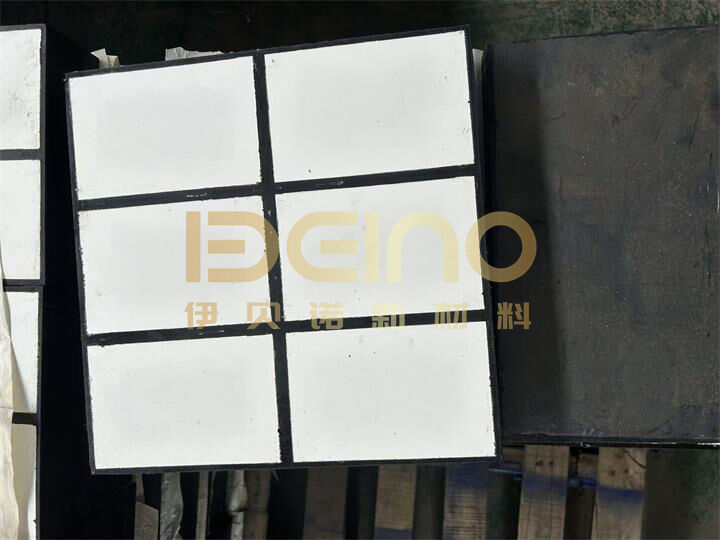
Highlight:
Strong Toughness ZTA Ceramics
, ZTA Ceramics Plate
, Strong Toughness Zirconia Toughened Alumina
Product Description
Zirconia Toughened Alumina (ZTA) ceramics represent a class of advanced composite materials that combine the inherent advantages of alumina (Al₂O₃) and zirconia (ZrO₂) through sophisticated composite technology. By dispersing zirconia particles within an alumina matrix, ZTA ceramics overcome the limitations of monolithic alumina (insufficient fracture toughness) and pure zirconia (high cost and thermal instability), achieving an optimal balance of mechanical strength, wear resistance, corrosion resistance, and cost-effectiveness. As a pivotal member of the advanced engineering ceramic family, ZTA has garnered widespread attention across global industrial sectors, driving innovations in manufacturing, electronics, aerospace, and medical technology.
Technical parameters
| Items |
Specifications |
| Al2O3 |
≥75% |
| Zirconia |
≥21% |
| Density |
4.2 g/cm3 |
| Compressive Strength |
≥ 1400 Mpa |
| Rockwell Hardness |
≥ 90 HRA |
| Vickers Hardness |
≥ 1350 HV10 |
| Fracture Toughness (KIC) |
≥ 5.5 Mpa.m1/2 |
| Bending Strength |
≥ 350 Mpa |
| Wear Volume |
≤ 0.009 cm3 |
| Tensile Strength (TSB) |
≥ 15 Mpa |
| Rubber |
Natural |
| Natural |
≥450 |
| Elongation |
450% |
Product Specifications
| Product Size |
150*300 200*300 300*300 500*500 450*300 530*450 |
| Ceramic size |
10*10mm~150*100mm |
| Rubber size |
2mm-15mm |
| Steel plate size |
3mm-10mm |
| product structure |
Steel plate + rubber + ceramic three-in-one liner
Rubber + ceramic two-in-one liner
|
Product Features
Enhanced Fracture Toughness: The stress-induced phase transformation of metastable tetragonal zirconia to monoclinic zirconia at the crack tip generates a volume expansion, which effectively "pushes back" the propagating crack and inhibits its growth. This mechanism significantly improves the fracture toughness of ZTA, typically ranging from 6 to 8 MPa·m¹/², far exceeding that of monolithic alumina.
High Mechanical Strength: ZTA exhibits excellent flexural strength (600-1200 MPa) and compressive strength (up to 2900 MPa), attributed to the dense microstructure formed by advanced sintering processes and the reinforcing effect of zirconia particles. The addition of nano-sized alumina or zirconia further refines grain size, enhancing surface energy and improving material strength.
Exceptional Wear & Corrosion Resistance: With a Vickers hardness of 1600-1800 HV, ZTA demonstrates outstanding wear resistance, making it suitable for harsh abrasive environments. Additionally, its chemical inertness enables resistance to acids, alkalis, salts, and high-temperature corrosive media, expanding its application in chemical and metallurgical processes.
Favorable Thermal Properties: ZTA maintains stable performance at temperatures up to 1600°C, with a moderate thermal conductivity (8-27 W/m·K) and low thermal expansion coefficient (9-10 × 10⁻⁶/K). These properties ensure minimal thermal deformation under rapid temperature cycling, making it ideal for high-temperature industrial components.
FAQ
Q1: What is the main difference between ZTA ceramics and monolithic alumina ceramics?
A1: The core difference lies in toughness and fracture resistance. ZTA ceramics incorporate zirconia particles into the alumina matrix, and the stress-induced phase transformation of zirconia at crack tips significantly improves fracture toughness (6-8 MPa·m¹/²), which is much higher than that of monolithic alumina (typically 3-4 MPa·m¹/²). Additionally, ZTA maintains the high hardness and wear resistance of alumina while overcoming its brittleness drawback.
Q2: In which applications is ZTA ceramics more advantageous than zirconia ceramics?
A2: ZTA ceramics have obvious cost advantages over pure zirconia ceramics while maintaining comparable toughness and wear resistance. They are more suitable for large-volume industrial applications with high-performance requirements but limited cost budgets, such as wear-resistant pipe liners, new energy vehicle insulation parts, and chemical valve components. Pure zirconia ceramics are more often used in high-precision fields with extreme requirements (e.g., some medical implants) despite higher costs.
Q3: What is ZTA ceramic?
A3:ZTA is an abbreviation for Zirconia-Toughened Alumina. It is a type of advanced ceramic material composed of a high-hardness alumina (Al₂O₃) matrix reinforced with a certain proportion of zirconia (ZrO₂) particles that exhibit a "phase transformation toughening" effect. It combines the advantages of both materials, possessing excellent toughness, hardness, and strength.
Q4:How do I determine if my operating conditions require upgrading to ZTA ceramics?
A4:The following situations are clear indicators that you should consider upgrading to ZTA:
Existing wear parts (including ordinary alumina ceramics) frequently experience "cracking" or "chipping" instead of uniform wear.
The worn areas show obvious "impact craters" or "groove-like wear."
The equipment experiences strong vibrations or material impact noise during operation.
The maintenance intervals are too short due to wear part problems, affecting production efficiency and scheduling.
Q5:Is the installation and maintenance of ZTA ceramics complicated?
A5: No, it's not complicated. The ZTA wear-resistant components we provide typically use the same proven installation methods as standard alumina ceramics:
Adhesive bonding: Using high-strength, high-temperature ceramic adhesives, suitable for flat or curved surfaces.
Mechanical fastening: Designed with bolt holes or dovetail grooves for secure installation and easy replacement on large equipment.
Modular design: Pre-fabricated wear-resistant liners or assemblies are available, significantly reducing on-site installation and downtime.

 Your message must be between 20-3,000 characters!