Highlight:
Product Description
In abrasive powder conveying systems, the internal components of ordinary rotary valves often wear out very quickly. Once the rotor and valve body are worn, problems such as air leakage, unstable feeding, material accumulation, and frequent shutdowns begin to appear.
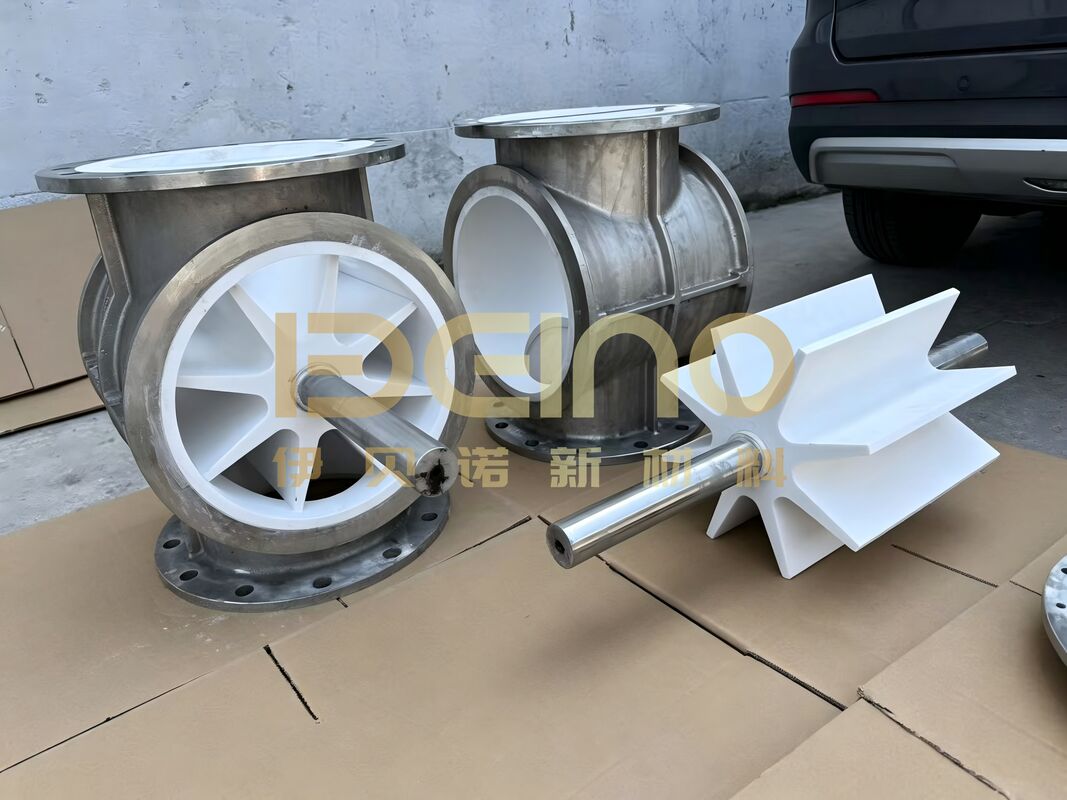
This alumina ceramic-lined rotary discharge valve is specially designed for severe wear working conditions. Both the valve housing and rotor are lined with high-purity alumina ceramic, forming a complete wear-resistant structure within the valve.
For industries handling cement powder, fly ash, lithium battery materials, silica powder, mining powder, and other abrasive bulk materials, ceramic-lined rotary valves can significantly improve service life and reduce maintenance frequency.
Product Features
Full Ceramic Wear Protection: Not only the valve body, but also the rotor blades are lined with alumina ceramic, protecting the main wear areas from direct material erosion.
Longer Service Life: Compared with traditional steel rotary valves, ceramic-lined structures greatly improve wear resistance under continuous abrasive conveying conditions.
Smooth Ceramic Surface: The smooth ceramic lining reduces powder sticking and improves discharge stability.
Suitable for Severe Abrasion: Widely used in pneumatic conveying systems handling highly abrasive powders and particles.

Why More Industries Are Switching to Ceramic Lined Valves
Traditional cast steel or alloy valves may work well at the beginning, but when handling highly abrasive materials such as silica powder, fly ash, cement powder, lithium battery materials, mineral powder, or metal particles, the wear speed increases rapidly.
Once the rotor and housing are worn:
Air leakage increases
Feeding becomes unstable
System pressure fluctuates
Energy consumption rises
Shutdown maintenance becomes frequent
Ceramic-lined rotary valves solve these problems by using ultra-hard alumina ceramic to protect the wear areas directly exposed to abrasive materials.
Product Structure and Manufacturing Features
Composite Structure Design
The valve body is made of CF8 stainless steel, which has strong pressure resistance and high mechanical strength. It can withstand the normal working pressure of the pipeline (1.0MPa, 1.6MPa), resist external impact, and is not easily deformed. The internal rotating cavity, rotor, flow channel, and other material passage parts are fully covered with alumina ceramic lining. The valve shaft is made of 304 stainless steel, which is corrosion-resistant and not easy to rust. The valve core, valve seat, flow channel corners, and other easily worn parts are reinforced to balance structural strength, wear resistance, and corrosion resistance.
Advanced Inner Liner Fixing Technology
Utilizing a one-piece, integrally sintered ceramic bushing process, the inner lining is a complete, seamless ceramic structure with no seams. The ceramic lining layer adheres tightly and firmly, preventing loosening and detachment under high temperature, high pressure, and material impact, making it suitable for long-term continuous operation. The inner wall is integrally molded, smooth, and seamless, eliminating material dead corners and preventing material accumulation and wear in gaps.
Excellent sealing performance: The sealing pair adopts a ceramic-to-ceramic sealing structure, combined with high-precision machining technology, which has strong sealing performance and can achieve bidirectional sealing. It effectively prevents dust leakage and gas crossflow, and has an excellent airlock unloading effect, meeting the closed operation requirements of pneumatic conveying systems. There is no ash leakage or dust generation during the operation, improving the production and operation environment.
Low energy consumption and easy maintenance: The smooth and low-resistance ceramic lining reduces material flow resistance, lowers valve opening and closing torque, and reduces energy consumption. Its wear-resistant and corrosion-resistant properties significantly reduce wear on vulnerable parts, eliminating the need for frequent replacements. The integrated ceramic bushing can be disassembled and replaced as a whole, making maintenance convenient and reducing operating costs.
FAQ
Q1: What are the specific materials and configurations of this ceramic unloading valve? What are the differences?
A1: The standard configuration uses a CF8 stainless steel valve body and a 304 stainless steel valve shaft. The rotor and rotating chamber are made entirely of 95-99% high-purity alumina ceramic. Unlike ordinary plated ceramic valves, this model features a one-piece cast ceramic bushing with no seams, making it resistant to erosion and preventing ceramic chipping. It is more durable than ordinary plated ceramic valves and metal wear-resistant valves.
Q2: What materials are it suitable for conveying? Can it handle highly abrasive powders?
A2: It is specifically designed for highly abrasive powders and granular materials, such as lithium battery powder, fly ash, mineral powder, sand, and corrosive chemical powders. It has high hardness, is erosion-resistant, and is not afraid of long-term impact from hard particles. It is also resistant to acid and alkali corrosion and can be used with both dry and wet materials.
Q3: Will the ceramic part be prone to cracking or chipping?
A3: No. The product uses an integrated sintered ceramic bushing, combined with mechanical slots and high-temperature adhesive for double fixation, resulting in a stable structure. Under normal operating conditions, it will not crack without impact from hard objects, unlike ordinary patch ceramic valves, which are prone to detachment and leakage. It is suitable for long-term continuous operation without shutdown.
Q4: What is the high-temperature resistance? Can it be used in high-temperature dust conditions?
A4: The normal long-term operating temperature is ≤300℃. The ceramic will not soften, deform, or oxidize at high temperatures. The stainless steel valve body has excellent high-temperature resistance and can be used directly in high-temperature powder conditions in power plants and kilns.
Q5: How is the sealing performance? Will there be dust leakage or air cross-contamination during operation?
A5: It uses a ceramic-to-ceramic hard seal, providing high sealing accuracy and a good airlock effect. It provides bidirectional sealing, and under normal pressure, there is no dust leakage or air cross-contamination, meeting the requirements for environmental dust removal and closed pneumatic conveying, ensuring no dust pollution in the workshop.
Q6: Is maintenance difficult? Are spare parts easy to replace?
A6: Maintenance is simple; there is no need to replace the entire valve body. Both the ceramic rotor and ceramic bushing can be disassembled and replaced individually, and the valve shaft is less prone to rust and wear. Compared to alloy valves, it has lower maintenance costs and shorter downtime for maintenance.
Q7: What are the advantages compared to ordinary cast-iron unloading valves?
A: Cast iron valve bodies are prone to rust, wear quickly, have a short service life, and are easily contaminated with materials. This model uses a combination of stainless steel and high-purity ceramics, which are corrosion-resistant, rust-free, and do not contaminate materials. Its service life is 3-5 times that of ordinary metal valves, and it can significantly reduce the frequency of valve replacement downtime under harsh operating conditions.
Q8: Can you customize the diameter, pressure, and drive method?
A8: Customization is supported. Standard pressures are 1.0MPa and 1.6MPa, and the diameter can be customized according to pipeline requirements. Drive options include electric, pneumatic, and manual, adaptable to various production line installation methods, and can also be customized according to material characteristics.

 Your message must be between 20-3,000 characters!