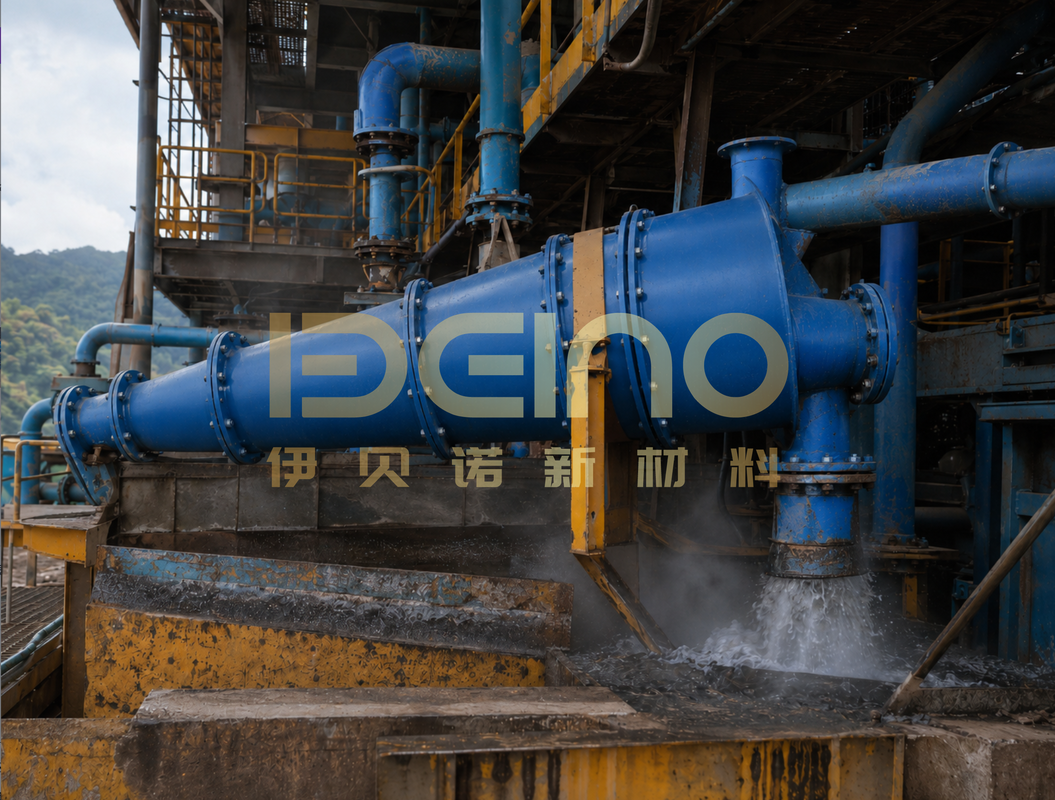
Highlight:
Abrasion Resistant Cyclone Liner
, Cyclone Wear Resistant Ceramic Liners
Product Type: |
Ceramic Cyclone Wear Liner |
Lining Material: |
Alumina Ceramic (≥95% Al₂O₃) |
Liner Geometry: |
Curved Tiles And Shaped Segments |
Lined Sections: |
Cylindrical Body, Cone, And Outlet Section |
Ceramic Thickness: |
Per Approved Drawing |
Dimensional Fit: |
Customized To Cyclone Shell Profile |
Installation Method: |
Adhesive-Bonded Ceramic Tiles |
Typical Applications: |
Coal Preparation, Mineral Processing, And Sand Washing |
Abrasion Resistant Cyclone Liner Wear Resistant Ceramic Liners
Product Description
ELACERA manufactures alumina ceramic cyclone liners for the cylindrical body, cone, and outlet sections of equipment used in coal preparation and mineral processing. The liners use ceramic containing at least 95% alumina. Curved tiles and shaped segments are made to fit the section being lined, giving the solids in the slurry a wear surface as they move through the cyclone.
When replacing a cone lining, two dimensions matter. The outside of the liner must fit the shell, and the inside must follow the required flow profile. The same shell can end up with a different internal diameter if the new ceramic is thicker. That difference is easy to miss when an inquiry gives only the cyclone model or nominal size.
How the Lining Changes from the Body to the Outlet
The cylindrical body has a constant diameter, so the ceramic tiles can follow a consistent curvature. In the cone, the diameter decreases toward the outlet. The shape and width of the ceramic segments need to follow that taper, especially in the rows near the small end.
The junction between two sections deserves a separate check. A new cone liner can fit its shell and still leave a step where it meets the existing body or outlet liner. If you are replacing only one section, include the finished inside diameter of the section on either side. Those dimensions help establish where the new ceramic wear face should meet the existing one.

What to Show on a Replacement Drawing
| Location |
Dimensions and Details to Provide |
| Cylindrical body |
Bare shell inside diameter, section height, and required finished inside diameter |
| Cone |
Large-end and small-end diameters, axial length, and cone angle. Indicate whether the angle shown is the included angle or the angle to the centerline. |
| Outlet section |
Finished bore, lined length, and dimensions at the joint with the adjoining section |
| Existing liner |
Ceramic thickness at an unworn area, if accessible, and any original lining dimensions available |
| Section joints |
Finished inside diameters on both sides of the joint, including any intentional step or transition shown on the original drawing |
Label each diameter as either a bare shell dimension or a finished lined dimension. If you are working from a used part, identify which areas have worn before using its measurements for a replacement.
Where These Liners Are Used
Typical duties include coal preparation, mineral processing, and sand washing. The location of the wear can help define what needs to be replaced. For example, if the damage is concentrated near the small end of the cone, include a photo of that area and the joint with the outlet. If wear is concentrated along a row of tiles, show where that row sits in the complete section. A close-up is easier to interpret when it is paired with a photo of the whole part.
Frequently Asked Questions
Can I order the lining for just one section?
Yes. Identify the body, cone, or outlet section you need and provide its drawing. For a partial replacement, include the mating dimensions of any adjacent lining that will stay in service.
Can you review a replacement if I only have a cyclone model number?
Send the model number with any section drawings, photos, or measurements you have. The model number helps identify the equipment. Section dimensions are needed to check the fit and the finished internal profile.
Can I increase the ceramic thickness when relining an existing shell?
Share the proposed thickness and the required finished diameters. Both need to be checked together, particularly at the small end of the cone and where the liner meets the outlet.
What if the old liner is too worn to measure accurately?
Provide the original drawing if available. Otherwise, send the shell dimensions and photos of the old liner, and mark any areas that appear unworn. This helps separate the original geometry from material lost in service.
Can I send a liner drawing before the steel shell is available?
Yes. Include the shell profile or assembly drawing if you have it, along with the required dimensions after lining. Those references help check the ceramic geometry before the shell arrives.
Request a Quote
Send us the following details so we can review the liner fit and prepare a quotation.
The cyclone model, if known, and the material it handles.
The section drawing or a dimensioned sketch, using the table above.
Whether you need a full reline or a replacement for one section.
For a replacement, photos of the worn area and the joints with any liners that will stay in place.

 Your message must be between 20-3,000 characters!