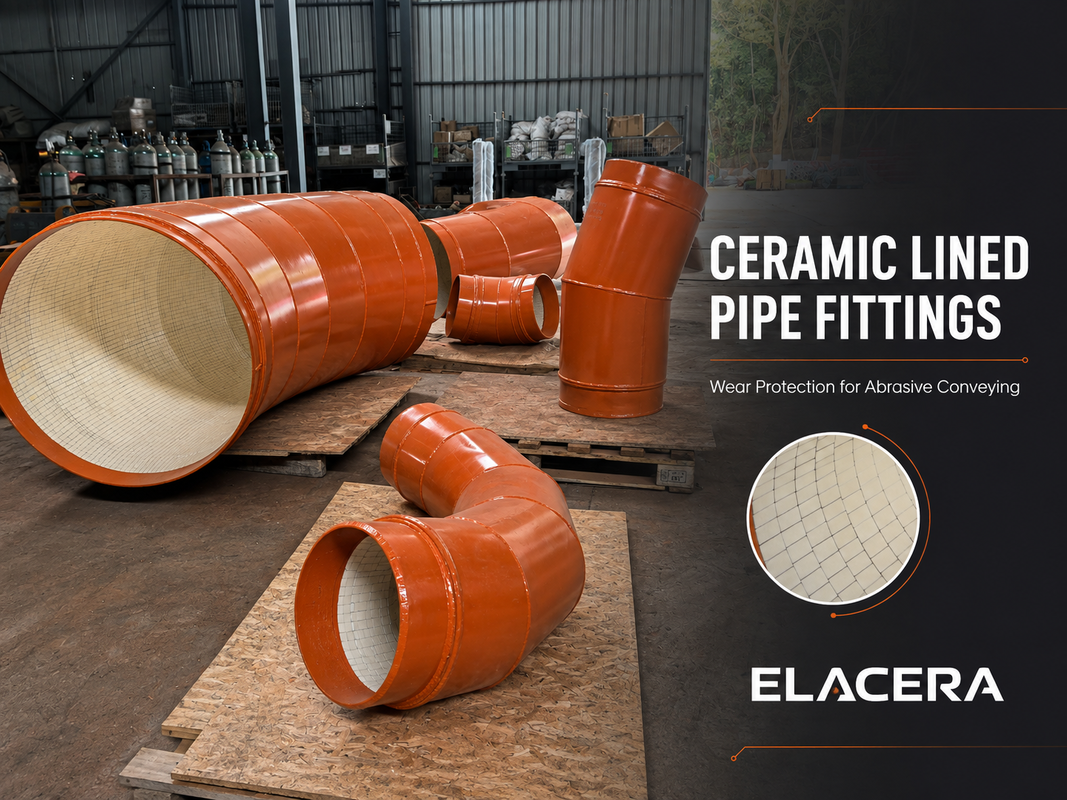
Highlight:
Product Type: |
Ceramic Lined Pipe Transition |
Lining Material: |
Wear-Resistant Alumina Ceramic Tiles |
Lining Structure: |
Customized Tile Layout For Tapered Sections |
Application: |
Abrasive Powder Conveying |
Conveying Medium: |
Abrasive Dry Powder And Bulk Solids |
Inlet And Outlet Diameter: |
Customized To Approved Drawing |
Transition Length And Profile: |
Customized |
Ceramic Thickness: |
Selected According To Operating Conditions |
Connection Type: |
According To The Pipeline Drawing |
Finished Internal Diameter: |
Confirmed Before Production |
Large Diameter Ceramic Lined Pipe Transition for Abrasive Powder Conveying
Product Short Description:
Large-diameter ceramic-lined pipe transitions protect tapered sections where abrasive particles may concentrate as the pipe diameter changes. Inlet and outlet diameters, transition profile, ceramic thickness, and connections are customized according to the approved drawing.
Large Diameter Ceramic Lined Pipe Transition for Abrasive Powder Conveying
A ceramic-lined pipe transition is a steel transition section protected internally with wear-resistant alumina ceramic tiles. It is used in abrasive powder conveying systems where a change in pipe diameter can create concentrated wear on the tapered surface. The inlet and outlet diameters, transition length, ceramic thickness, and connection details can be customized according to the pipeline drawing.
Product Overview
A pipe transition is not simply a straight pipe with two different diameters. As material passes through a reducer or enlarger, its velocity and distribution change.
Particles may move towards one side of the taper, creating localized sliding wear or impact. Wear may also become concentrated near the inlet, outlet, or the connection with the adjacent pipe.
The lining design must therefore follow the actual flow path and changing internal geometry—not only the nominal pipe diameter.

Key Features
- Alumina ceramic tile lining follows the tapered internal surface
- Suitable for large-diameter and non-standard transition profiles
- Customized inlet, outlet, length, and connection dimensions
- Smooth lining termination helps reduce exposed wear steps
- Finished internal diameter is confirmed before production
Why Use Ceramic Tiles in a Pipe Transition?
An integral ceramic sleeve is practical for many straight pipe sections, but it may be difficult to manufacture for a large-diameter or continuously changing profile.
Individual ceramic tiles can be arranged along the taper to cover the changing geometry. The tile size, joint position, and lining termination should be reviewed according to the transition shape and expected direction of material flow.
The typical lining option is 95% alumina ceramic. Final ceramic grade and thickness are confirmed according to the conveyed material, particle size, velocity, and observed wear pattern.
Typical Technical Information
|
Item
|
Typical specification
|
| Product type |
Ceramic tile lined pipe transition |
| Lining material |
Typically 95% alumina ceramic |
| Steel shell |
According to approved drawing |
| Inlet and outlet diameter |
Customized |
| Transition length and profile |
Customized |
| Ceramic thickness |
Selected for the operating conditions |
| Connection type |
According to the pipeline drawing |
| Conveying medium |
Abrasive dry powder and bulk solids |
| Finished internal diameter |
Confirmed before production |
Technical Advantages and Design Considerations
Flow direction: A converging transition and an expanding transition produce different particle movement. The actual conveying direction should be marked on the drawing.
Transition profile: A short or steep taper may increase turbulence and localized impact. Transition length should be reviewed together with the available installation space.
Ceramic thickness: Thicker ceramic reduces the finished bore. Thickness must be balanced against wear conditions and the required conveying capacity.
End connection: The ceramic lining should connect as smoothly as practical with the adjacent pipe lining to avoid an exposed edge or sudden internal step.
Applications
Ceramic lined pipe transitions are commonly considered for systems conveying:
- Fly ash and coal powder
- Cement and clinker dust
- Mineral powder and sand
- Other abrasive dry particles
Typical industries include power generation, cement, mining, mineral processing and bulk material handling. Slurry, strong corrosion, unusual temperature or special pressure conditions require a separate technical review.
Manufacturing, Inspection and Packing
The steel transition is checked against the approved dimensions before lining. During production, we check ceramic coverage, internal surface continuity, lining termination, and flange orientation.
Finished large-diameter fittings are protected individually and secured on a steel rack or packed in a wooden case according to product size and transport requirements.
Information Required for Quotation
Please provide:
- Inlet and outlet diameters
- Overall length or taper angle
- Converging or expanding flow direction
- Conveyed material and particle size
- Conveying velocity and operating conditions
- Existing wear position or site photographs
- Required finished internal diameter
- Flange standard or connection drawing
FAQ
Why can a pipe transition wear faster than a straight pipe?
The change in diameter affects particle velocity and distribution, which may concentrate wear on the taper or one side of the fitting.
Why are ceramic tiles used instead of an integral sleeve?
Ceramic tiles are often more practical for large diameters and continuously changing internal profiles.
Is thicker ceramic always better?
No. Excessive thickness reduces the finished bore and may affect material flow. Thickness should be selected for the actual wear conditions.
Can ELACERA® manufacture according to an existing drawing?
Yes. The steel structure, ceramic layout, connections, and finished internal diameter are reviewed from the confirmed drawing.
What information is most important before quotation?
The diameters, transition length, flow direction, material characteristics, and existing wear pattern are the main starting points.
Talk to a Wear Protection Expert
Send us your transition drawing and operating information. We will review the likely wear area, ceramic layout and connection details before preparing the technical quotation.
ELACERA| Wear Protection Expert

 Your message must be between 20-3,000 characters!