Highlight:
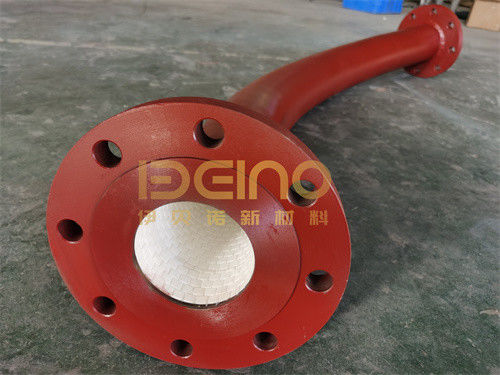
ISO Wear Resistant Elbow
, Smooth Wear Resistant Elbow
ISO Wear Resistant Ceramic Pipe Smooth Wear Resistant Elbow
Product Description
ELACERA ceramic-lined elbows are available with 95% and 99% alumina wear linings for abrasive conveying systems. Both grades provide a hard ceramic contact surface inside the metal elbow. The choice depends on the required wear performance, existing maintenance interval, and cost of replacing the component.
A higher alumina content is worth considering when the ceramic itself wears too quickly. It is not automatically the answer when tiles loosen, edges break, or the lining fails at a connection.

95% and 99% Alumina: Reference Properties
|
Property
|
95% Alumina
|
99% Alumina
|
|
Al₂O₃ Content
|
≥95%
|
≥99%
|
|
Density
|
>3.80 g/cm³
|
>3.83 g/cm³
|
|
Vickers Hardness, HV10
|
≥1200
|
≥1300
|
|
Rockwell A Hardness
|
≥85 HRA
|
≥90 HRA
|
|
Flexural Strength
|
≥330 MPa
|
≥340 MPa
|
|
Compressive Strength
|
≥1200 MPa
|
≥1300 MPa
|
|
Fracture Toughness, KⅠC
|
≥4.0 MPa·m¹ᐟ²
|
≥4.2 MPa·m¹ᐟ²
|
These are reference material specifications. Final acceptance values and test requirements should follow the agreed ceramic grade and inspection documents.
The figures describe the ceramic, not the pressure capacity, temperature limit or expected service life of the complete elbow. A material comparison is useful, but it is only one part of selecting a finished lining system.
When 95% Alumina Is a Practical Choice
A well-manufactured 95% alumina lining can be a suitable option when it provides the required operating interval without premature ceramic loss.
Existing service records are valuable here. If the elbow remains usable until the planned shutdown, a more expensive ceramic may offer little practical benefit. The priority may instead be consistent material quality, reliable installation and replacement availability.
The 95% grade should not be treated simply as a temporary or low-duty option. Its suitability depends on the conveyed material and how the complete elbow performs in that position.
When to Evaluate 99% Alumina
The 99% grade can be considered where the ceramic faces progressively lose thickness and the current lining does not meet the required maintenance interval.
The reference specifications above show higher hardness for the 99% grade. However, alumina percentage alone does not describe grain size, porosity, sintering quality, or internal defects. These characteristics also influence wear.
Before changing grades, compare the proposed material data with the ceramic currently in service. Ask whether the expected improvement addresses the actual failure mode.
The additional purchase cost is easier to justify when a meaningful extension of the maintenance interval would reduce difficult access work, repeated replacement, or an unscheduled stoppage.
Identify What Ended the Previous Elbow’s Service
Different damage patterns call for different decisions:
- Gradual thinning across ceramic faces: review material wear performance and remaining lining thickness.
- Missing tiles with little face wear: investigate retention, bonding, and operating conditions.
- Cracked or chipped ceramic: examine impact exposure, support, installation damage, and local geometry.
These observations are starting points, not a diagnosis from appearance alone.
For example, changing from 95% to 99% alumina will not correct inadequate support beneath a tile. Likewise, a stronger adhesive does not resolve a ceramic grade that wears away before the scheduled shutdown.
Photographs taken during removal, together with operating hours and throughput records, help make the next specification more useful than simply ordering a higher percentage of alumina.
Compare Finished Elbows Under Comparable Conditions
When evaluating a grade change, keep the other major variables as consistent as practical. Bend geometry, ceramic thickness, fixing arrangement and installation position can all affect the result.
Record what changed between the old and replacement components. If the ceramic grade, lining thickness and bend radius all change together, the outcome cannot be attributed to the material grade alone.
Agree on the inspection points before the trial. Useful records include remaining ceramic thickness at identified positions, visible damage, operating hours, and conveyed quantity.
Also specify any required surface finish separately. A smooth-looking bore does not identify the ceramic grade, and 99% alumina does not automatically mean a polished or joint-free lining.
FAQ
Will 99% alumina always last longer than 95% alumina?
No fixed improvement can be promised from composition alone. The ceramic quality, wear mechanism, elbow construction and operating conditions must be considered together.
Can the ceramic grade be identified by its white appearance?
Appearance is not a reliable grade verification method. Use the agreed material designation and traceable inspection documentation for the supplied components.
Why are hardness and fracture toughness both listed?
Hardness describes resistance to indentation and surface penetration. Fracture toughness describes resistance to crack propagation. Neither value, on its own, predicts how a complete elbow will perform.
ELACERA supplies alumina ceramic-lined elbows according to confirmed drawings and material requirements. The grade is selected to address the operating problem, rather than increasing alumina content without a clear reason.

 Your message must be between 20-3,000 characters!