Highlight:
50mm Rubber Ceramic Wear Liners
, Rubber Ceramic Wear Liners White
, 50mm Rubber Ceramic Liners
50mm Rubber Ceramic Wear Liners White In Convenient Construction
Product Description
A chute can wear in two very different ways. The panel below the feed opening takes the first hit. Farther down, material slides along the wall and can wear a narrow track into the liner. If you are replacing both panels, the condition of each one tells you something about what the replacement needs to do.
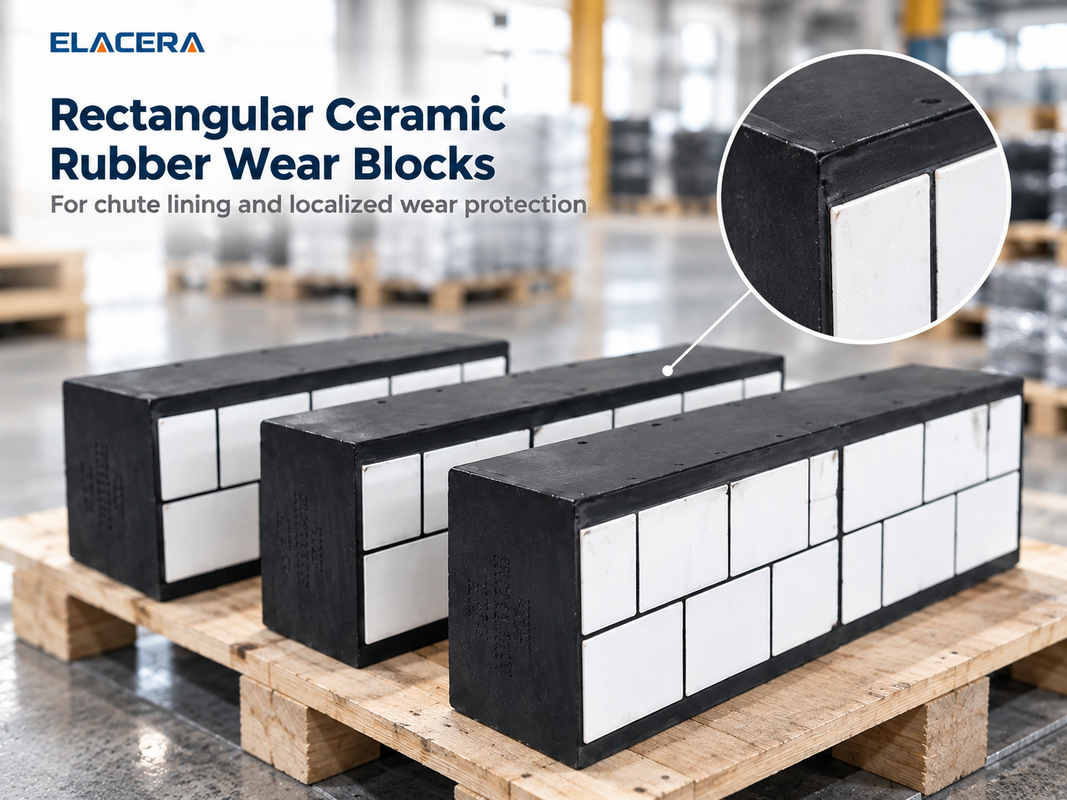
ELACERA rubber ceramic wear liners combine an alumina ceramic wear face with a rubber backing. The ceramic provides a hard surface against sliding material, while the rubber cushions impact from falling feed. The panels are used in chutes, hoppers, transfer points, and other bulk material handling equipment where abrasion and impact occur together.
Start with the Wear Pattern
A smooth, worn strip usually shows where material has been sliding. Localized chips or damage concentrated below the inlet are worth checking against the direction of incoming feed. Mark these areas on a photo or drawing before ordering. A close-up shows the damage, while a wider photo shows where it sits in relation to the feed opening and the direction of flow.
The feed itself matters. Cement powder moving down a chute presents a different duty from clinker dropping into a hopper. For coarse feed such as coal, limestone, clinker, or slag, share the approximate maximum lump size and drop height if known. For powders, mineral concentrates, or tailings, include whether the material is handled dry or wet and where it tends to wear the lining.
Adhesive-Bonded and Bolt-On Mounting
Adhesive bonding may suit a rubber-backed ceramic panel where the mounting surface and operating conditions are suitable for the selected adhesive. For a bolted installation, the panel design can incorporate a steel backing plate and the required fixing details.
On an existing chute, check how maintenance crews reach the fasteners. A bolt pattern may match the drawing, yet access behind the chute wall can determine whether the panel can be installed or removed as planned. Include that access in the replacement drawing or show it in a photo.

Dimensions to Check Before Ordering
|
What to Check
|
What to Show on the Drawing
|
|
Panel outline
|
Length, width, corner cuts, and any openings around brackets or supports
|
|
Layer thickness
|
Ceramic thickness, rubber thickness, and total finished panel thickness. Include steel backing thickness when applicable.
|
|
Existing fixings
|
Hole or stud locations measured from the same panel edges, along with the required fixing sizes
|
|
Fit with adjacent panels
|
Available installation depth and the level of the neighboring wear faces
|
|
Installation orientation
|
Material flow direction and the location of the main impact area
|
When measuring a worn panel, look for a protected edge or use the original drawing to establish its starting thickness. Also check the joint where the new panel meets an existing liner. A raised edge facing the incoming material can take repeated hits at the joint.
Frequently Asked Questions
Can you make a replacement from a worn sample?
A sample can help identify the construction and fixing arrangement. Send any original dimensions you have, especially if the edges or wear face have lost material. If there is no drawing, a dimensioned sketch and photos of the mounting surface are a good starting point.
Can I specify a 50 mm liner?
Yes, you can submit a 50 mm requirement for review. Indicate whether it refers to the finished panel or to a ceramic component. The drawing should identify the dimension and show the individual layers.
Can the inlet and lower chute use different panel designs?
Yes. Show which panels receive direct impact and which mainly see sliding wear. The panel layout can then be reviewed by location, including how the panels meet at each joint.
Can I reuse the holes in my existing chute?
An existing hole pattern can be reviewed for a bolt-on replacement. Provide the hole diameters, center distances, and offsets from the panel edges. A photo of the back of the chute helps show the available fastening space.
Can rubber ceramic liners be used with hot feed?
Share the normal and peak temperatures at the liner surface. The rubber and mounting system are selected for the conditions at that location, including any short periods of higher temperature.
Request a Quote
Send your panel drawing or a dimensioned sketch, the material handled, and photos of the worn area. If the equipment already has a lining, include a photo showing how the old panel is fixed. That gives us a starting point for reviewing the panel construction, thickness, and mounting.

 Your message must be between 20-3,000 characters!